The Funniest Things Coworkers Say During Video Calls
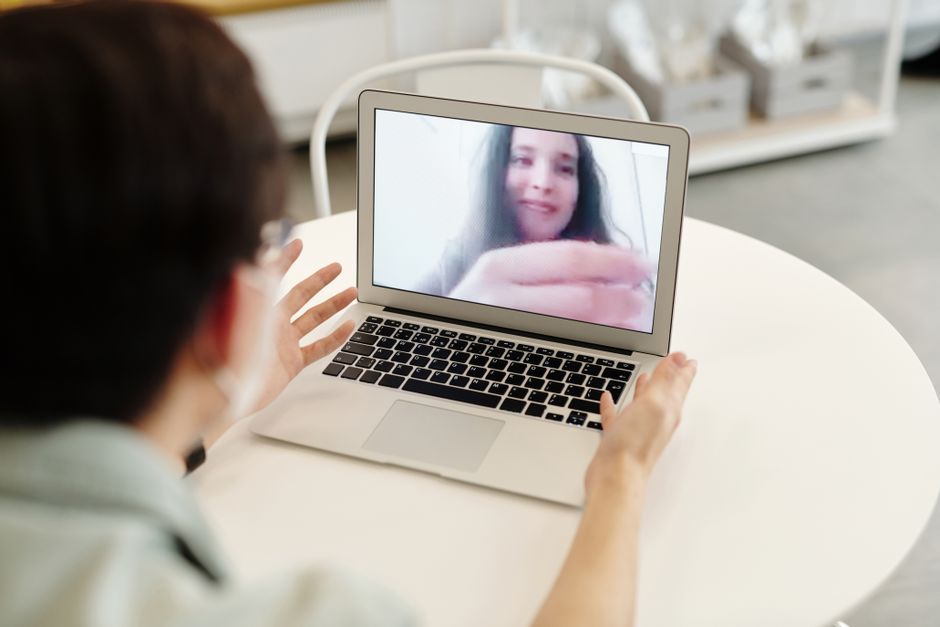
Video calls have become a standard part of the modern workday, and with that shift comes a new catalog of social quirks and comedic moments. The medium itself invites a certain amount of unpredictability: microphones toggle on and off, cameras capture whatever happens to be behind us, and household life occasionally wanders into the frame. Among the more amusing byproducts of this arrangement is the language people use during these calls, which often reveals how new and slightly unnatural remote communication still feels.
This article gathers some of the funniest things coworkers say during video calls, along with a look at why these moments happen and how teams tend to respond. The goal is not to mock anyone but to observe a shared cultural experience that almost every organization has encountered. Many of these lines are familiar because remote meetings, despite their efficiency, remain a stage for small human errors.
The observations below are drawn from common experiences reported across workplaces in the United States. They are presented in a neutral, process-oriented spirit, with the understanding that humor is subjective and that any laughter depends on context, timing, and the comfort level of the people involved.
The Enduring Comedy of the Mute Button
No single feature of video calling has generated as many memorable quotes as the mute button. The toggle is simple in theory and surprisingly slippery in practice, and the resulting comments have become a genre of their own. When someone has been speaking at length before realizing the microphone was off, the room often hears a version of the same confession, delivered with a mix of sheepishness and relief.
Common lines include variations such as “Sorry, I was on mute for all of that,” “I just gave a whole presentation to myself,” and “Did anyone catch any of that, or should I start over?” There is also the hopeful inquiry, “Am I unmuted now?” usually followed by a pause while several people simultaneously signal yes or no. These remarks are funny because they acknowledge a shared vulnerability: everyone on the call has either made the same mistake or is about to.
The mute button also produces accidental performances. Someone might narrate a mundane task, sigh loudly, or hum a tune while believing the room cannot hear, only to be greeted by a chorus of “We can hear you.” The subsequent line, often something like “Oh no, how much did you all hear?” tends to be the punchline. In many teams, these incidents are treated lightly and become part of the informal lore of remote work.
- “I was on mute the whole time, so please imagine a very compelling argument.”
- “Can everyone hear me, or am I just talking to my ceiling fan?”
- “I’ll tell you the part I said out loud and you can fill in the rest.”
- “That sigh was supposed to be private information.”
What makes the mute-related dialogue funny is its honesty. People are openly admitting a small technical failure in front of an audience, and the audience recognizes the feeling immediately. The humor is situational rather than targeted, which helps keep it comfortable for everyone involved.
Pets, Children, and Other Unscripted Guest Stars
Household life does not pause for meetings, and video calls occasionally invite unexpected participants. A cat may walk across the keyboard, a dog may announce itself at the exact moment a serious point is being made, or a child may appear to ask a question unrelated to the agenda. The comments that follow these interruptions are often among the most quotable lines of the day.
Typical remarks include “That’s my cat, and apparently she has opinions about the budget,” “Please excuse the dog, he is very involved in this project,” and “My child would like to know why I am talking to the computer.” Sometimes the guest star is purely auditory: a doorbell, a delivery, or a barking dog in the background prompts a resigned “That’s not me, that’s the neighbor’s dog, and I have no control over it.” The self-aware tone is part of what makes these moments endearing.
These interruptions also reveal how teams adapt. Colleagues often respond with warmth, sharing their own stories and treating the guest star as a brief, welcome break rather than a disruption. The humor here depends on the culture of the group; in many workplaces, a pet on camera becomes a lighthearted talking point that outlasts the meeting itself.
“My cat just walked across the keyboard, so if the document changes, that was her.”
Unscripted guests are a reminder that remote work blends professional and personal spaces. The line that follows a surprise appearance is usually a quick attempt to regain composure, delivered with a smile. When handled with good humor, these exchanges can strengthen a sense of shared experience.
The Frozen Frame and the Vanishing Connection
Technical difficulties produce their own vocabulary. When a video freezes, the person on screen may look like a still photograph with a surprised expression, prompting comments such as “You’re frozen, but honestly it’s a great look,” “I’ll take that as a yes, since you haven’t moved in two minutes,” or “Are you buffering, or did we lose you?” The person affected often returns with “I’m back, what did I miss?” and the room scrambles to summarize several minutes of discussion.
Connection problems also generate the occasional accidental exit. A dropped call may be followed by a message reading “Sorry, my internet blinked,” or a comment upon return like “I was in the hallway of the internet for a moment.” People describe their connection in creative ways: “My video is doing an interpretive dance,” “I sound like a robot under water,” and “I can hear you, but you look like a watercolor painting.” These descriptions are humorous because they translate a frustrating experience into shared language.
The humor of technical glitches is largely cathartic. They happen to nearly everyone, and a witty remark can defuse the mild annoyance of a lagging call. At the same time, the experience remains contextual: a glitch that produces laughter in one meeting could be genuinely disruptive in another, particularly when time-sensitive matters are being discussed.
The Unplanned Background Commentary
Remote calls are also notable for the commentary people offer about their own environment. A coworker may apologize for the laundry visible behind them, note that the lighting makes them look “like a witness in a documentary,” or explain that the framed photo on the wall is not a design choice but a temporary necessity. These remarks often begin with “Please ignore the mess” and end with “I swear my house is usually nicer than this.”
There is also the recurring question of the virtual background, which invites lines such as “I chose this background so you can’t see the actual chaos,” or “The background is fake, but the coffee mug is real.” Some coworkers describe their setup with dry precision: “I’m working from a closet, and it’s the quietest place in the house,” or “My office is now a card table and a folding chair.” Such statements are funny in part because they are unexpectedly candid.
The humor in these moments comes from the mild tension between professionalism and domestic reality. Many people find it reassuring to hear that colleagues are navigating the same circumstances. Still, reactions vary, and what one person finds amusing another may find uncomfortable, so these exchanges depend heavily on the norms of the specific workplace.
Why These Moments Matter for Team Culture
The lines coworkers say during video calls do more than entertain. They serve as small acknowledgments of shared circumstances, and they can help teams build a repertoire of inside references. A well-timed quip about a frozen screen or an unexpected pet can ease tension, especially during long stretches of meetings. At the same time, humor functions best when it is inclusive and when people feel safe to be imperfect.
Observing these moments also offers a kind of informal map of remote work culture. Teams that joke gently about mute buttons and background clutter tend to signal that minor mishaps are tolerated. Teams that respond with silence or irritation may signal different norms. In neither case is humor guaranteed to produce a particular outcome; the effect depends on trust, timing, and the people involved.
Finally, these anecdotes are a reminder that video calls, for all their utility, remain a relatively new social format. People are still learning how to navigate cameras, microphones, and domestic interruptions in real time. The funniest quotes often capture that learning process, and the ability to laugh at them depends on context. For organizations like Chuckle Yard that follow workplace humor, these small moments are a rich and ongoing source of material, offered without any promise that everyone will find the same line funny.